EUROGUSS 2026: Why the Most Expensive Die Casting Mistakes Happen on Screen
Nuremberg, 13–15 January 2026 – When a cast part causes trouble in series production, the cause is rarely found in the foundry. It dates back months, to a geometry nobody questioned in time. That was exactly the starting point of Teraport’s appearance at EUROGUSS 2026.
Europe’s leading trade fair for die casting brought together 722 exhibitors from 37 countries and around 15,000 trade visitors in Nuremberg. Teraport was on site with two software solutions that answer the same question from different angles: what is this geometry going to cost me – technically and economically?
Spotting critical geometries before they get expensive
With veoCAST, Teraport demonstrated how components can be validated across the entire process chain. Material accumulations, unfavourable wall thickness transitions, areas that are difficult to demould – virtual analyses and the veo Quality Gates make such risks visible while changes are still cheap.
Visitors valued that this stays close to practice. “We worked with real customer projects at the booth, not with demo geometries,” reports Dr. Stefan Wittmann, Product Manager veo and Head of Algorithm Development at Teraport. “Once someone sees their own part on screen and immediately spots the critical area, there is no need to discuss the benefit any further.”
Tool costs that can be explained
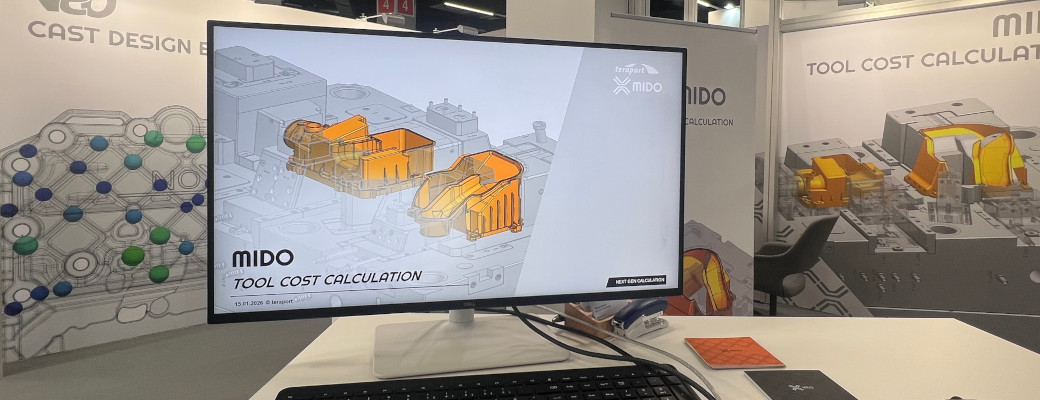
The second focus was mido. The software calculates tool and mould costs automatically from the 3D CAD model, identifies the relevant cost drivers directly on the component and makes it clear where a figure comes from.
For purchasing and sales, that is the decisive difference. “A calculation is only reliable once everyone involved understands it,” says Philipp Hübner, Product Manager mido at Teraport. “mido delivers not just a result, but the reasoning behind it – fast, standardised and comprehensible for everyone on the project.”
The demand is there – and it is getting more specific
What stood out in Nuremberg was how precise the visitors’ questions have become. Less about whether, more about integration, interfaces and rollout within their own processes.
“Modern cast part development requires more than theory,” summarises Raphael Heilig, Managing Director of Teraport. “It requires tools that work in everyday practice – practical, efficient and economically viable. The conversations at EUROGUSS showed that this is exactly what the industry is looking for.”
The projects initiated at the fair are currently being continued – with teams that want to decide earlier than before.